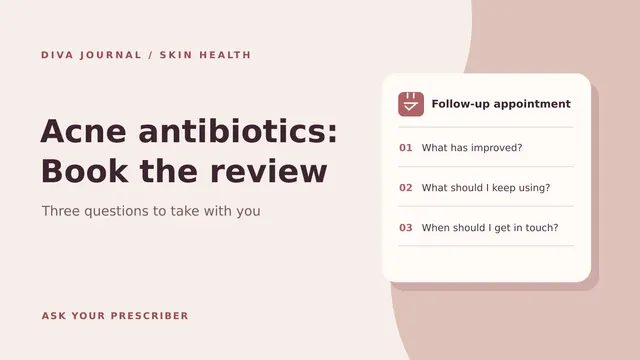
If you’re prescribed an antibiotic for acne, ask when you’ll review it before you leave the appointment. That follow-up is where you and your prescriber decide whether the treatment has helped, how to handle side effects and what to do next without keeping you on antibiotics longer than you need.
It’s World Antimicrobial Resistance Awareness Week, which runs from 18 to 24 November. Resistance means bacteria stop responding to the medicines used against them. It’s the bacteria that become resistant, not your body. Acne prescriptions are one place where that distinction turns into a useful question: if the tablets help, what will keep the acne under control once the course ends?
Why you might get a skin treatment as well as tablets
Not everyone with acne needs an antibiotic. For moderate inflammatory acne, South Africa’s primary healthcare skin guideline includes an oral antibiotic alongside benzoyl peroxide, a non-antibiotic treatment applied to the skin. It calls for a review at three months for that regimen. The American Academy of Dermatology’s guideline also recommends limiting oral antibiotic use and pairing it with a topical treatment such as benzoyl peroxide. Your prescriber decides whether that approach suits you and when you should be seen again.
Imagine you’ve noticed fewer sore spots, but the skin treatment makes your face sting. Both details belong in the same conversation: one tells the prescriber what’s improving, the other what’s hard to keep using. If irritation or another side effect is bothering you, ask your prescriber or pharmacist sooner rather than waiting for the scheduled review.
Three questions to take to the review
- How will we tell whether it’s working? Describe what changed since you started. Are the painful spots less frequent? Are new deep spots still appearing?
- What should I keep using if the antibiotic stops? Go through your prescriptions and skincare products together. That’s more useful than trying to remember at home which product was meant to continue.
- What if the acne comes back? Agree on when to contact the practice. Don’t restart leftover tablets or ask for a repeat without a review.
What if I’m pregnant or planning a pregnancy?
Tell your prescriber before starting or changing your acne treatment. Some acne medicines, including certain oral antibiotics, may be unsuitable in pregnancy. Ask which options are appropriate for you.