A waist can measure smaller and the scale can barely move. If you’re comparing body contouring offers before booking, ask what changed: the photo, the tape measure, the thickness of fat at one spot, or the number on the scale?
That question matters in a review published on 15 November 2026. It looked at 60 studies of focused ultrasound for cosmetic uses, from body contouring to face and neck tightening. Researchers reported changes on several measures, but the studies used different devices, treated different areas and checked results at different times. The authors didn’t combine the results into a single estimate, and they flagged weaknesses in study design and reporting. Two of the review authors work for a device maker, which the paper discloses.
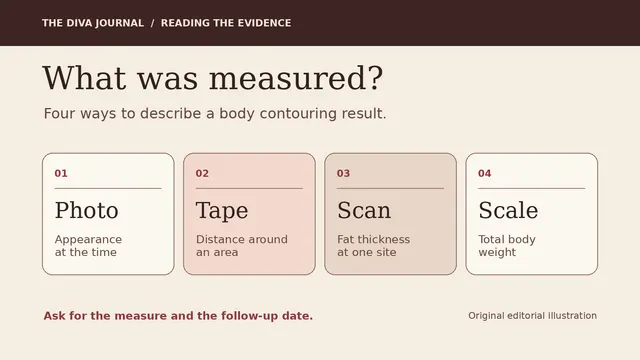
A photo, a tape and a scan answer different questions
- A photo shows how an area looked when the picture was taken. Lighting, posture and camera angle can change what you see. Look for the same setup in both photos and ask how long after treatment the second one was taken.
- A tape shows the distance around an area. A smaller waist measurement doesn’t tell you how much of the change came from fat. Ask where the tape was placed and whether both measurements were taken the same way.
- A scan can measure the thickness of fat at a specific site. That can tell you more about that spot, but it doesn’t measure how much weight someone lost. The scale measures total body weight, not the change in one small area.
One controlled study of a specific focused ultrasound device makes the distinction clear. Researchers treated one side of each participant’s waist and left the other side untreated for comparison. They took standardised photos and measured fat thickness. At the follow-up 16 weeks after the last treatment, the study reported a thinner layer of fat under the skin at the treated site. That tells us about the particular device, area and follow-up studied. It doesn’t tell us what to expect from a different machine or what would still be visible a year later.
The question to ask before you book
Try: “For this exact device and this area, what did you measure, when did you check again, and what happened for people who saw little or no change?” That gives you more to go on than the strongest photo in a gallery.
The US Food and Drug Administration’s consumer guide distinguishes non-invasive body contouring from weight-loss treatment and notes that results may be temporary. It also lists risks for therapeutic ultrasound, including pain and burns, and cautions against use in people with certain implants or compromised skin at the treatment area. Ask a qualified healthcare professional whether the procedure is appropriate for you and what risks apply to the device being proposed. If your main goal is weight loss or better metabolic health, discuss that goal directly rather than using a contouring photo as evidence.
Before choosing a procedure, read why the consultation is part of the treatment decision. You can also review Diva’s ultrasound liposuction information and ask which device and assessment apply to your situation.